Home The Show The Stations The Magazine Feedback


Season 6

• John & Oliver Jeffries
• Ronnie Glass
• Marjorie Linthicum
• Val Haynes
• Chief Crowfoot
• Hans Richter
• Al Stohlman
• Charles Russell
• John Innes
• James Sanderson
• High Chaparral
• Lloyd Cyclone Smith
• Commissioner Woods

Season 5

• Harrigan Sisters
• Pan Philips
• Nettie Ware
• JH Necklace
• Charles Noble
• Slim Morehouse
• Father McDougall
• Tom Dorchester
• Tom Lauder
• Lloyd Dolen
• Bud Cotton
• BX Stagecoach Line
• Duncan McEachran

Season 4

• Stu Davis
• Isabella Miller Haraga
• Hank Pallister
• CFCW
• Eric Harvie
• Guy Weadick
• WJ Oliver
• Anna Chevalier
• William Ogle
• Kenny McLean
• Don Remington

Season 3

• Andy Russell
• Jack Morton
• Father Lacombe
• Bill Twan
• David Thompson
• William Roper Hull
• Louis Riel
• Jerome and Thaeus
  Harper
• James Gladstone
• Bert Sheppard
• Harry Hargrave
• Paddy Cripps
• Pat Burns

Season 2

• Airwolf
• Bob Nolan
• Will James
• Geraldine Moodie
• Johnny Boychuk
• Midnight
• Bill Peyto
• General Pilsner
• Jerry Potts
• Clem Gardner
• George Lane
• Antoine Boitanio
• Kootenai Brown

Season 1

• Gabriel Dumont
• Wilf Carter
• A.E. Cross
• Pete Knight
• Sitting Bull
• W.D. Kerfoot
• Sam Steele
• Grant MacEwan
• Herman Linder
• Chunky Woodward
• John Ware

Trailblazer

Presented by Hugh McLennan
"Spirit of the West"

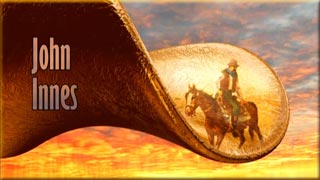
John Innes

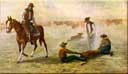
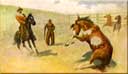
John Innes was, without a doubt, the most prolific frontier artist in early 20th century Canada.

Born in 1863 in London Ontario, Innes was educated in Ontario and in England, where he excelled in design, drafting, and painting.

Upon returning to Canada, Innes headed west, blazing a trail ahead of the Canadian Pacific Railway when his artistic ability and adventurous spirit enabled him to join a survey party in the foothills of the Canadian Rockies, where he created maps and sketches.

When he reached Alberta, John embraced the cowboy life ranching and raising horses. In 1885 he was drawing cartoons for various periodicals, and later published his own newspaper in Banff titled "Mountain Echoes.

After twelve years in the West, Innes was back in Toronto where he worked as a writer and illustrator.

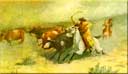
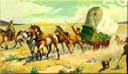
He mass produced postcards from his original painting romanticizing life on the Canadian Frontier.

He created a series of art work he called Epic of the West as he traveled back to Vancouver by pack train in 1905. The series accurately portrayed the era of the Indian, the fur trader and the buffalo. The spectacular collection was purchased by the Hudson's Bay Company, and now hangs in Winnipeg.

Art Collectors have called John Innes the Remington of the Canadian West,"


Sponsors

Cowboy Country Productions Ltd. ~ Privacy policy